Table of Contents
When buyers compare custom steering wheel options for Mercedes-Benz, BMW and Audi, the best choice is rarely based on appearance alone. Material selection, OEM function retention, fitment accuracy, production lead time, and target customer profile all matter before an order is placed.
For workshops, dealers, resellers and brand buyers, a practical selection process usually starts with three questions:
- Which vehicle platform is the project for?
- Which material and feature combination fits the end market?
- Does the supplier understand OEM-style fitment and function retention?
At YUNZ AUTO, most steering wheel projects are built around German performance platforms. If your first priority is reliable fitment and a professional finish, start by reviewing the relevant brand pages:
1. Start with the Correct Vehicle Platform
A custom steering wheel should always be selected by exact vehicle platform, not only by brand. Even within one brand, steering wheel shape, button layout, trim structure, and airbag compatibility can differ significantly.
For example, a Mercedes W205 C63 AMG custom steering wheel is different from a Mercedes W206 C63 steering wheel upgrade. A BMW G80 M3 steering wheel has different styling and control expectations from a BMW G82 M4 steering wheel. An Audi RS3 custom steering wheel may require a different finish and button layout from an Audi RS6 C8 steering wheel.
If the vehicle platform is not confirmed first, the project can easily go wrong at the fitment stage. For B2B buyers, this is often the most expensive mistake because it affects rework, communication time, and customer satisfaction.
2. Choose Materials Based on End-Market Expectations
Material choice should reflect how the end customer will use the vehicle and what visual style the market prefers.
| Material | Typical Use Case | Main Advantage | Main Consideration |
|---|---|---|---|
| Carbon fiber | Performance-oriented builds | Strong visual upgrade and sporty appearance | Surface style should match vehicle theme |
| Forged carbon | Premium custom builds | Distinctive pattern and modern look | Pattern is more aggressive and less uniform |
| Alcantara | Driver-focused or track-inspired interiors | Good grip and sporty feel | Requires more maintenance than smooth leather |
| Nappa leather | Luxury-oriented interiors | Refined feel and premium comfort | Less aggressive visual style than Alcantara |
| Mixed materials | OEM+ custom projects | Balances comfort, grip and appearance | Requires careful color and trim coordination |
For a Mercedes luxury or executive build, Nappa leather with carbon trim may be more suitable. For a BMW M or Audi RS project, Alcantara and carbon fiber are often preferred. If the goal is to create a premium but OEM-style result, material combinations usually perform better than a single material across the whole wheel.
3. Confirm Which OEM Functions Must Be Retained
Many buyers focus on shape and finish first, but OEM function retention is often more important in real-world delivery.
Before ordering, confirm whether the project needs to retain:
- Multifunction buttons
- Paddle shifters
- Heating
- Airbag compatibility
- OEM-style control logic
This matters especially for high-value daily-driven vehicles. A steering wheel that looks impressive but loses important functions may not meet buyer expectations, particularly in Europe and North America where OEM-style usability is a major selling point. YUNZ AUTO positions many builds as OEM+ upgrades rather than purely decorative replacements. That is why function retention should be discussed before material approval and before production starts.
4. Match the Steering Wheel Style to the Brand Character
Different brands usually require different visual language.
Mercedes-Benz
Mercedes-Benz buyers often expect a balance between luxury and performance. For example, the Mercedes W205 C63 AMG and Mercedes W223 S-Class. AMG-oriented builds often work well with carbon fiber, Alcantara grip zones, and center markers, while luxury-focused platforms may benefit more from Nappa leather and cleaner trim integration.
BMW
BMW M buyers usually prefer more aggressive performance styling. Relevant examples include the BMW G80 M3 and BMW G87 M2. Popular combinations include carbon fiber top and bottom sections, Alcantara side grips, M-color stitching, and OEM-style M button retention.
Audi
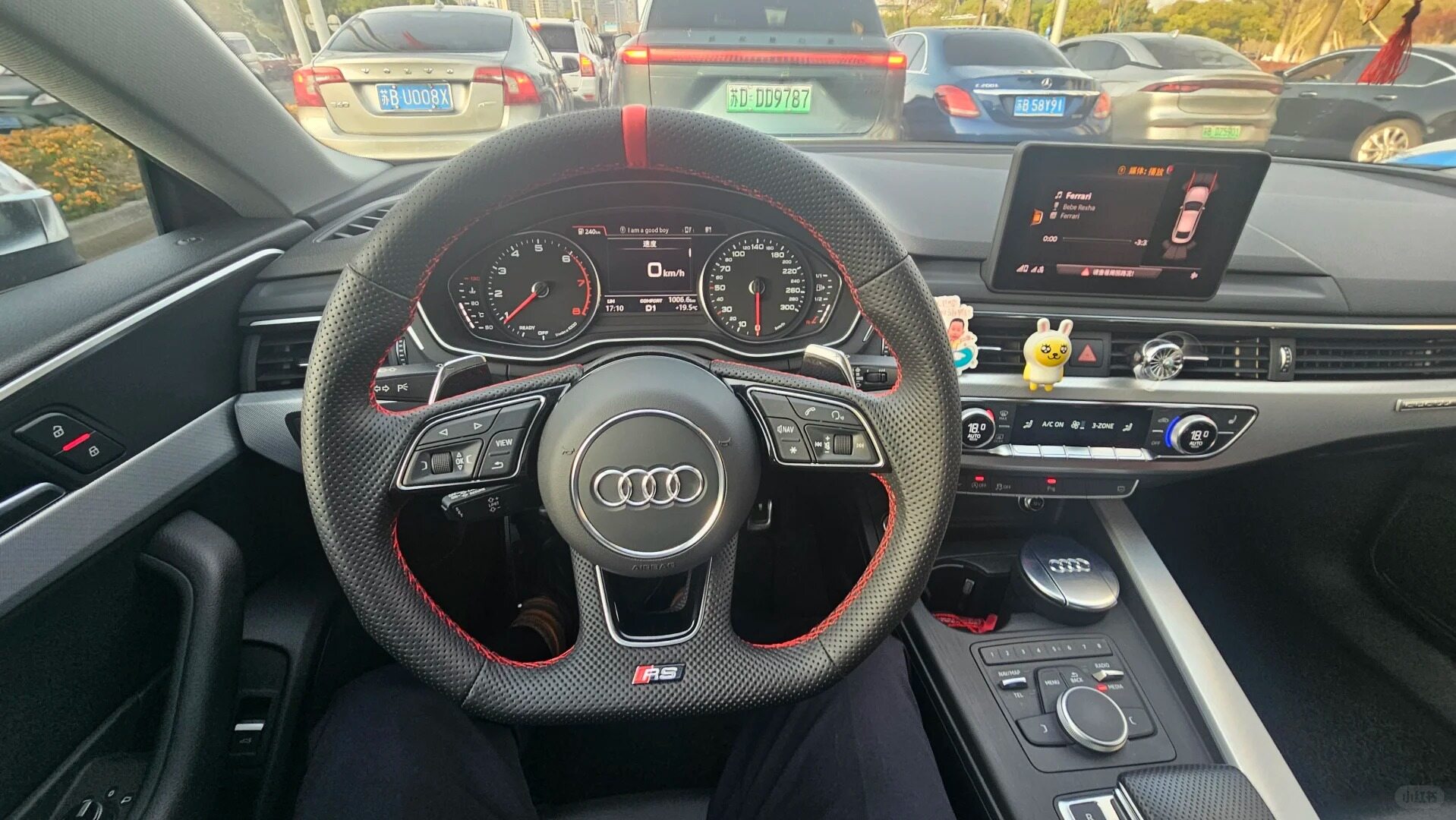
Audi RS projects frequently lean toward flat-bottom designs, technical detailing and sporty OEM+ execution. Useful references include the Audi RS3, Audi RS5 B9, and Audi RS6 C8. For Audi, the most successful steering wheel builds are usually those that feel sharper than stock without looking visually disconnected from the interior.
5. Review MOQ, Lead Time and Project Type Early
Before confirming a supplier, buyers should align expectations on business terms. At YUNZ AUTO:
- MOQ for many steering wheel projects can start from 1 piece
- In-stock products typically ship in around 3 days
- Custom steering wheel projects usually take around 3 to 12 days
- The usual warranty period is 1 year for non-human damage
- OEM and ODM support is available
These points matter for workshops and dealers who need to balance sample orders, low-volume testing, and repeatable supply for future projects.
6. A Practical Selection Checklist
Before placing an inquiry, prepare the following information:
- Exact vehicle model and model year
- Preferred wheel shape
- Preferred material combination
- Required OEM functions to retain
- Target customer type or market
- Estimated order quantity
- Whether the project is sample-based, retail customization, or OEM / ODM
This helps reduce back-and-forth communication and improves quotation accuracy.
7. Final Recommendation
The best custom steering wheel is not the one with the most visual features. It is the one that matches the correct platform, retains the right functions, fits the intended customer group, and can be delivered consistently.
For Mercedes-Benz, BMW and Audi projects, buyers should focus on exact fitment, material suitability, OEM function retention, realistic lead time, and supplier understanding of German vehicle upgrade standards. If you want a project-specific recommendation, the fastest next step is to send your vehicle platform, material preference and target quantity through the contact page.
FAQ
Can I order one sample first?
For many steering wheel projects, MOQ can start from 1 piece, especially when the build is intended for sampling or fitment verification.
Which material is best for a performance-oriented project?
It depends on the use case. Carbon fiber and Alcantara are common choices for sporty builds, while Nappa leather may be more suitable for luxury-focused interiors.
Can OEM buttons and heating usually be retained?
Many OEM+ projects are designed around function retention, but this should always be confirmed by exact vehicle platform and configuration before production.
Need Help Choosing the Right Steering Wheel?
Contact YUNZ AUTO for a fitment-based recommendation and quotation. Send your vehicle platform, material preference and target quantity.
Request a Quote