Manufacturing Authority15 min read

Carbon Fiber Steering Wheel Manufacturing Process: Complete Technical Guide

A comprehensive look inside our dry carbon fiber production facility, from raw material selection through final quality inspection. This guide covers every stage of manufacturing automotive-grade carbon fiber steering wheels for OEM and aftermarket applications.

Y

YUNZ AUTO Engineering Team

Published: January 2011
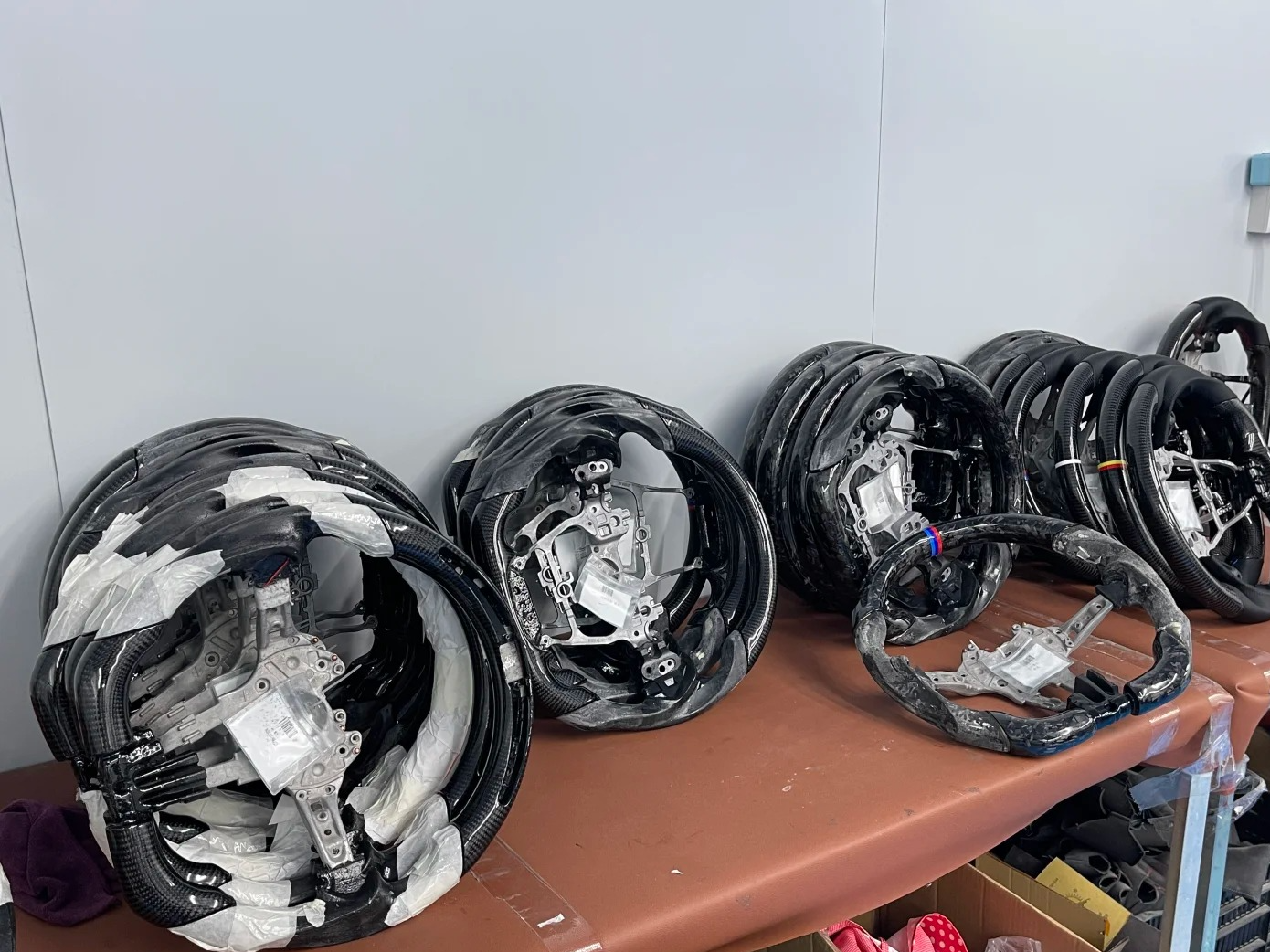
Carbon fiber steering wheel manufacturing process in factory

1. Raw Material Selection and Preparation

The foundation of premium carbon fiber steering wheels begins with meticulous raw material selection. We source only aerospace-grade pre-preg carbon fiber from certified suppliers in Japan and Germany, ensuring consistent weave patterns and resin content.

Key Material Specifications:

  • T700/T800 grade carbon fiber fabric (200-300gsm)
  • High-performance epoxy resin systems
  • Pre-preg material stored at -18°C until use
  • Shelf life monitoring and batch tracking
  • Material certification documentation for each batch
Carbon fiber raw material preparation and storage

2. Carbon Fiber Layup Process

The layup process determines the structural integrity and aesthetic quality of the final product. Our technicians follow precise ply orientation schedules to optimize strength while minimizing weight.

Layup Process Steps:

  1. Cutting carbon fiber plies using CNC automated cutters
  2. Manual ply stacking with specific fiber orientation angles (0°, 45°, 90°)
  3. Application of release agents and mold preparation
  4. Compression layup under controlled temperature (22-24°C)
  5. Vacuum bagging to remove air pockets and excess resin

Each steering wheel requires 8-12 individual plies, with additional reinforcement layers at high-stress points such as spoke connections and mounting areas.

3. Molding and Curing

Once laid up, the carbon fiber assembly undergoes precision molding and controlled curing to achieve the final shape and mechanical properties.

Curing Parameters:

Temperature

120-140°C

Pressure

6-8 bar

Cycle Time

90-120 minutes

Cooling Rate

Controlled 2°C/min

Post-curing annealing relieves internal stresses and ensures dimensional stability. Each batch undergoes hardness testing (Barcol hardness 85-90) before proceeding to machining.

4. CNC Machining and Trimming

After curing, rough-molded parts are transferred to our CNC machining center for precision trimming, drilling, and surface preparation.

  • 5-axis CNC machines for complex geometry cutting
  • Diamond-coated cutting tools to prevent delamination
  • Automated edge trimming with ±0.05mm tolerance
  • Drilling for mounting points and electrical connections
  • Surface inspection for voids or defects

5. Surface Finishing and Coating

Surface finishing enhances both aesthetics and durability. We offer multiple finish options based on customer requirements and application specifications.

Gloss Finish

High-gloss UV-resistant clear coat

Matte Finish

Satin matte protective coating

Textured

Anti-slip textured surface option

All coatings undergo adhesion testing (ASTM D3359), UV resistance testing (QUV accelerated weathering), and chemical resistance validation to ensure long-term performance in automotive environments.

6. Assembly and Integration

Final assembly integrates the carbon fiber shell with internal structural components, electrical systems, and trim materials.

  • Installation of metal reinforcement inserts
  • Integration of heating elements (if equipped)
  • Wiring harness routing and connector installation
  • Airbag module mounting point preparation
  • Alcantara or leather grip section attachment
  • LED display integration (optional feature)

7. Quality Control and Testing

Every steering wheel undergoes comprehensive quality inspection before shipment. Our QC system includes both visual inspection and functional testing.

Quality Tests Performed:

Visual Inspection100% of units
Dimensional Verification每 batch抽样 10%
Hardness Testing每 batch 抽样 5%
Electrical Function Test100% of units
Airbag System Check100% of units

8. Packaging and Shipping

Finished products are packaged according to international shipping standards, with custom packaging options available for B2B partners and private label programs.

  • Individual protective wrapping with anti-static materials
  • Custom foam inserts for shock absorption
  • Branded outer cartons (private label available)
  • Palletizing for bulk shipments
  • Export documentation and customs clearance support

Ready to Discuss Your Carbon Fiber Project?

Our engineering team can provide technical consultation, custom manufacturing solutions, and competitive pricing for your carbon fiber steering wheel requirements.